
Thanks, that’s everything I need. Your shop analogy, five-step process, and “speak their business language” advice give this post a voice generic articles can’t copy. I used the CMI definition page as a source and kept your traffic figures labeled as illustrative estimates.
Content Strategy for Stakeholders: How to Explain It in Plain Business Language
You built a solid plan. Then a business owner asks, “Why not just post on social media every day?”
If you’ve heard that, you know the real challenge. Content strategy for stakeholders is less about content and more about translation. Stakeholders care about customers, revenue, and growth. They don’t care about “content pillars” or “SERP visibility.”
This guide shows how I explain content strategy to people who don’t speak marketing. It includes the analogy that worked, the five-step process I follow, and the mistakes to avoid.

Why Stakeholders Struggle to Understand Content Strategy
Most stakeholders aren’t resisting your plan. They just see content differently than you do.
To many business owners, content means posting. If the page looks active, the work must be working. That belief is the biggest gap I see.
Here are the two misunderstandings I run into most:
- “More posts means more results.” Stakeholders often think content strategy is about publishing more blogs and social posts.
- “Results should show up this week.” Many expect more sales, traffic, and engagement within days.
Both come from a lack of context, not a lack of intelligence. Your job is to supply that context in their language.

The Shop Analogy That Made It Click
I once worked with a business owner who wanted more brand awareness and more customers. They believed regular social media posting was enough.
My first explanation was too technical, and they were confused. What worked was this:
“Posting content without a strategy is like opening a shop without knowing who your customers are or what they need.”
That line changed the conversation. A shop owner would never stock shelves at random. They’d ask who walks by, what those people want, and how to get them through the door.
Then I made it concrete. I showed how one blog post answering a specific customer question Content Strategy for Stakeholders could appear on Google and bring a potential customer to their website. That’s when they understood that content isn’t about posting often. It’s about reaching the right audience with the right message at the right time.
A 5-Step Process to Explain Content Strategy to Stakeholders
I follow the same simple sequence every time. It keeps the conversation on business outcomes, not marketing terms.
- Start with their business goals. Ask what they want: awareness, leads, sales, or something else. Don’t mention content yet.
- Describe the audience. Explain who the customers are, what problems they have, and what they search for online.
- Present the strategy. Suggest formats like SEO blogs, social posts, videos, and website pages. Tie each one to a goal they named in step one.
- Explain how you’ll measure success. Choose a few simple metrics, such as website traffic, engagement, leads, and conversions. Be upfront about how long results take.
- Share examples and invite feedback. Show how a planned approach could help their business, then answer questions without rushing.
Notice the order. The strategy comes third, not first. By then, the stakeholder has already agreed on the goals and the audience, so your plan feels like a Content Strategy for Stakeholders logical answer instead of a pitch.
Marketing Language vs. Business Language
Jargon creates distance. A quick translation table helps, and I’d suggest keeping one handy before any stakeholder meeting.
| Marketing term | What stakeholders hear | Say this instead |
|---|---|---|
| Brand awareness | Something vague | More people know we exist |
| Organic traffic | Technical noise | Visitors who find us on Google without paid ads |
| SEO | A mystery | Being the answer when customers search |
| Engagement | Likes and emojis | People reading, clicking, and coming back |
| Conversion | A sales term | A visitor becoming an inquiry or a customer |
| Content pillars | A buzzword | The main topics we want to be known for |
You don’t need to avoid these terms forever. Introduce them gradually, once the stakeholder understands the idea behind them.
Focus on Results That Matter to the Business
Another common mistake is reporting likes and views as proof of success. They feel good, but they rarely answer the question a stakeholder is really asking: Content Strategy for Stakeholders “Is this bringing in business?”
Compare the two kinds of metrics:
- Surface metrics: likes, views, follower count
- Business metrics: website visits, leads, inquiries, conversions
Likes and views aren’t useless. They show whether your message is reaching people. But when you report only those, stakeholders can’t connect content to revenue. Lead with the business metrics, and use the surface ones as supporting detail.
Set Realistic Expectations on Timing
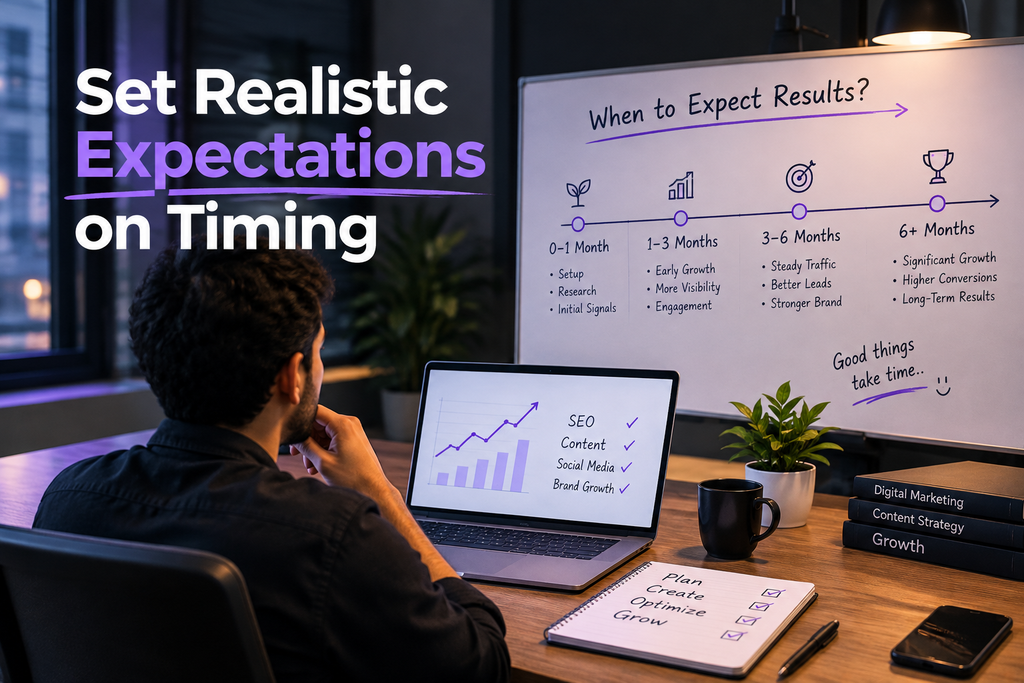
Content strategy is a long-term process. Saying so clearly, early, and more than once is one of the best ways to protect trust.
In one project, Content Strategy for Stakeholders we focused on SEO blogs and social content built around relevant keywords. Early signs, like better visibility, showed up within a few weeks. Meaningful SEO growth took a few months. Organic traffic rose by roughly 25–30% over three months, and we also saw better Content Strategy for Stakeholders engagement and more inquiries from potential customers.
A caution: those figures are illustrative estimates Content Strategy for Stakeholders , not verified client results. Your numbers will vary based on your industry, competition, site history, and how consistently you publish. Don’t promise a stakeholder a specific percentage. Promise a process, and show the early signals as they appear.
Google’s own guidance reinforces why this takes time. Its advice on creating helpful, people-first content centers on serving real readers, and that kind of authority builds gradually.
One Piece of Advice for Tomorrow’s Meeting
If you have to explain content strategy to a skeptical stakeholder tomorrow, do this: speak their business language, not yours.
Skip the technical terms and the complicated frameworks. Talk about Content Strategy for Stakeholders more customers, better awareness, and more website traffic. Use simple examples, real data, and clear goals. Above all, set realistic expectations.
When stakeholders see how content supports their goals, trust follows. For a deeper look at defining the discipline itself, the Content Marketing Institute’s content strategy definition is a solid reference to share.
Frequently Asked Questions
How do you explain content strategy to a non-marketer?
Compare it to running a shop. You wouldn’t open one without knowing your customers or what they need. Content strategy is the plan for who you’re talking to, what they need, and where you’ll reach them.
What should I include when presenting content strategy to stakeholders?
Cover their business goals, the target audience, the content formats you’ll use, how you’ll measure success, and a realistic timeline. Keep it to what connects to their goals.
How long does content strategy take to show results?
Early signs, such as better visibility, can appear within a few weeks. Meaningful SEO growth usually takes a few months. Timing varies by industry, competition, and consistency.
Which metrics should I show stakeholders?
Lead with website visits, leads, inquiries, and conversions. Use likes and views as supporting Content Strategy for Stakeholders context, not as the headline.
Conclusion: Make Content Strategy for Stakeholders a Shared Plan
Teaching content strategy for stakeholders comes down to three habits. Start with their goals, use plain language and real examples, and be honest about timelines.
As a Freelance Digital Marketer in Kasargod, I believe a successful content strategy should focus on business goals, audience needs, and long-term growth. Whether you’re building brand awareness, improving website traffic, or generating leads, the right content strategy can make a real difference.
Next time you present, try the shop analogy and the five steps above. Then watch how the conversation shifts from “Why are we doing this?” to “How can I help?”